|
|

|
|
View in browser
|
Splenic Salvage in Polytrauma
05/12/2026
|
|
IT’S TRAUMA TUESDAY is
a Free Weekly Newsletter
Brought to you by
TCAR
Education Programs
|
|
For nurses and other clinicians
practicing anywhere
along the trauma care
spectrum
|
|
|
|
|
|
Take a quick test of your trauma care
knowledge
|

|

|

|
|
|
|
Article of the Week
Spleen Salvage In Polytrauma: Should It Stay or Should It Go?
|

|
|
In a recent large study of trauma patients with severe blunt splenic injuries, researchers compared splenectomy with nonoperative management, including close monitoring and angioembolization. The findings strongly support what many of us see in practice: when it’s safe to do so, preserving the spleen yields better outcomes. Patients managed nonoperatively had lower mortality, fewer complications, and shorter hospital stays, even among some who were unstable at initial presentation. These data reinforce the importance of vigilant nursing monitoring and frequent reassessment for patients undergoing nonoperative management. Subtle changes, such as increased abdominal pain, declining hemoglobin levels, or worsening vital signs, may signal treatment failure and warrant rapid escalation. While spleen-preserving strategies are preferred, delayed recognition of deterioration can significantly increase risk. Click the link to view the article or watch a short AI-generated article summary (5 min 14 sec).
|
|
|
|
Huang W, Braschi C, Jin F, Lewis M, Demetriades D. Severe Splenic Injuries in Patients With Multiple Trauma. JAMA Surg. 2026
|
|
|
|
Media of the Month
7 Lessons from Heaven: How Dying Taught Me To Live a Joy-Filled Life
|

|
|
Sooner or later, most trauma nurses will encounter a patient who was clinically dead and then revived. The stories these individuals share (and there are thousands of them) are highly compelling. This book, by Mary C Neal, MD, is a first-person account of a young, healthy physician who was submerged for 45 minutes and yet came back to life, neurologically intact, with an incredible story to tell. Get your Kindle, paper, or Audible copy at the Amazon link below.
|
|
|
|
|

|

|
|
Come See Us at NTI!
|
|
AACN's National Teaching Institute & Critical Care Exposition is coming up May 17-20th in sunny San Diego, California. A great opportunity to learn, network, connect, and be inspired. Stop by the TCAR Education Programs booth (#435) to say hello and pick out a fun conference badge ribbon!
|
|
|
|
|

|
|
|
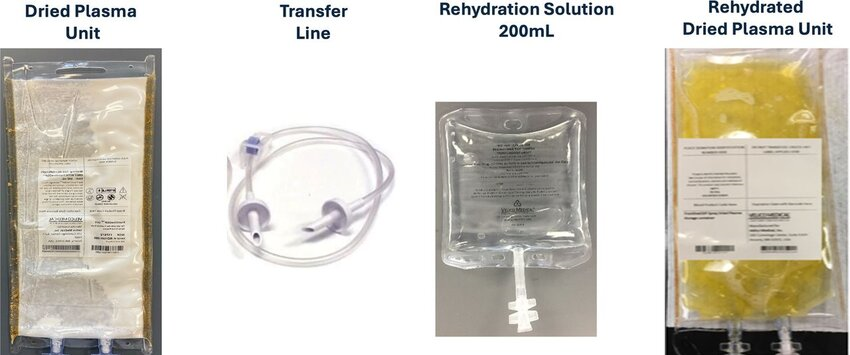
Spray-Dried Plasma
|
|
Spray-dried plasma is emerging as a promising alternative to freeze-dried plasma, offering a practical solution for managing traumatic hemorrhage when traditional plasma is unavailable. Designed for rapid use in prehospital settings, rural or austere hospitals, and military care, this shelf-stable option can be quickly reconstituted with 200 mL of sterile water for infusion. Currently under approval in Canada, spray-dried plasma could be available in the US before 2030 and has the potential to expand access, support local production, and strengthen national preparedness for mass casualty events through strategic stockpiling. Learn more about the product and the process at the Velico website. Click the link below!
|
|
|
|
|

|
|
|
|
|
|
Follow Us
Want to join the trauma care conversation?
Follow Us on Facebook, Instagram, and X.
|

|
|
|
|
|

|
|
TCAR
Education Programs
tcarprograms.org
info@tcarprograms.org
Office: (503) 608-4900
International Toll-Free: +1 800-800-2015
|
|
|
|
Copyright © 2026 TCAR Education Programs. All rights reserved.
You are receiving this email because you opted in by purchasing or registering for a
course or subscribing to our newsletter on our website.
Want to change how you receive these emails?
You can
update
your preferences or
unsubscribe
|


