|
|
IT’S TRAUMA TUESDAY is a Free Weekly Newsletter
For nurses and other clinicians practicing anywhere along the trauma care spectrum
|
|
|
|
Kidney Consequences of Crush Injury
11/17/2026
|

Test Your Trauma Care Knowledge
|
|
|

|
|
Article of the Week
Crush Injuries Can Crush Kidneys
|
|
Crush syndrome results from prolonged muscle compression, leading to rhabdomyolysis and the systemic release of toxins that can cause renal failure and other life-threatening complications. First recognized during World War II, the condition occurs in approximately 10% of crush injury cases and has a mortality rate as high as 20%. Despite its historical roots, recent advances are expanding our understanding of its pathophysiology and treatment. This narrative review by Khan et al. highlights these developments and emphasizes the importance of early recognition and intervention to improve patient outcomes. Click the link to view the article or watch a short AI-generated article summary (5 min 59 sec).
|
|
|
|
Khan S, Neradi D, Unnava N, Jain M, Tripathy SK. Pathophysiology and management of crush syndrome: A narrative review. World J Orthop. Apr 18 2025;16(4):104489.
|
|
|
Trauma Happenings
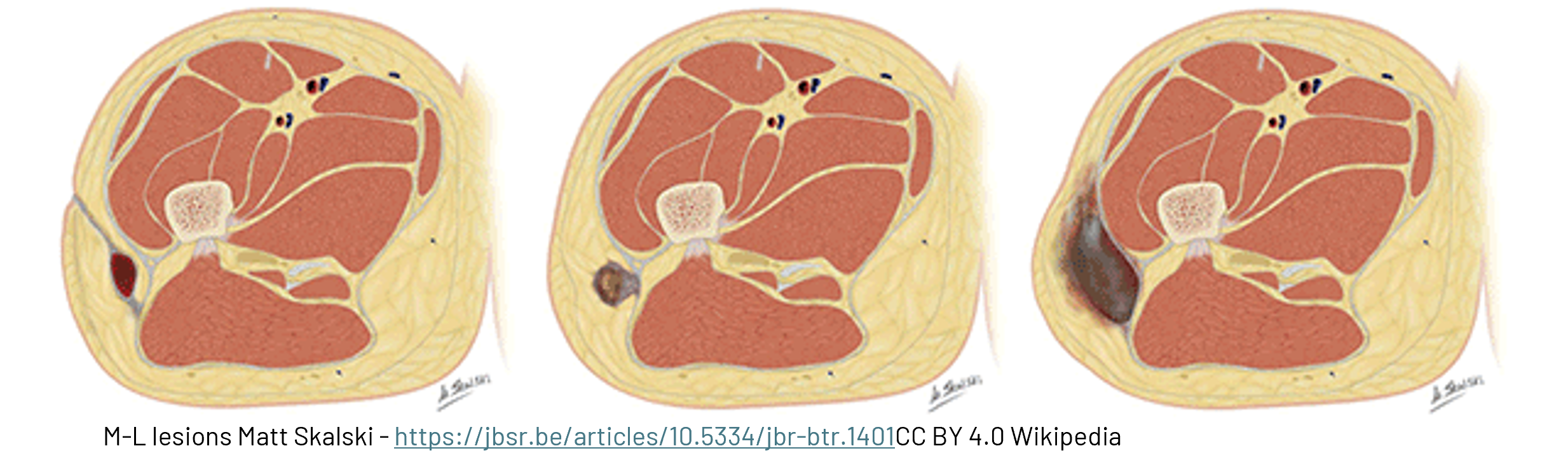
M-L Lesions: Unusual but Tricky
|
|
A Morel-Lavallée lesion is an internal degloving injury in which shearing forces separate the skin and subcutaneous tissue from the underlying muscle fascia. This creates a potential space in which blood, fluid, and pus can accumulate. These lesions most commonly occur on the thighs and buttocks, but can occur anywhere muscle and subcutaneous tissue meet. Some M-L injuries are obvious, but many are subtle, and delayed presentations are the norm. Treatment is challenging, but our friend The Trauma Pro has given us a quick overview of these injuries and a treatment algorithm. What’s the treatment for M-L lesions? Check out next week’s Trauma Happenings for Part 2 of this series.. Click the link to view the blog.
|
|
|

|
|
TEP Tips & Tricks
TCAR Education Programs is Celebrating a Milestone—And the Nurse who Helped us Reach it!
|
|
Meet Stacey McCabe, our 100,000th learner to complete a TCAR or PCAR course. She's a busy mother of three whose nursing journey reflects a commitment to learning and professional growth. Stacey began her career as a certified nursing assistant, became a licensed practical nurse, and earned her Bachelor of Science in Nursing in 2008. Today, she works in the float pool at HCA Florida Bayonet Point Hospital, frequently caring for adult trauma patients in progressive care and step-down units. She is also pursuing a nurse practitioner degree. Although this was Stacey’s first TCAR course, she found the experience thorough, engaging, and filled with “Aha!” and “Oh, yeah!” moments. She especially appreciated the case studies, which brought concepts to life and connected the course material to patient care. For this busy nurse, mother, and graduate student, the engaging format made learning time well spent. Congratulations, Stacey! We are proud to celebrate your achievement and grateful to include you in the TCAR community. Behind every learner is a nurse making a difference—and you represent 100,000 reasons to celebrate!
|

|
|
Fun Facts
Handshake or Kiss?
|
|
Shaking hands transfers more contagious germs than a quick social kiss. Research funded by organizations such as the International Scientific Forum on Home Hygiene shows that people are far more likely to spread respiratory viruses (such as the flu or the common cold) or stomach bugs through handshakes. When you shake hands, pathogens transfer into the micro-crevices of your skin. You then involuntarily touch your eyes, nose, or mouth, introducing the germs into your system. On the other hand, saliva contains antibacterial enzymes and immune proteins that help fight off external pathogens, reducing the immediate transmission risk during minor oral contact. Nevertheless, I think I’ll stick to shaking hands with most people!
|

|
|
Trauma Trained & Trauma Ready
|
|
Resuscitation-based courses focus on prehospital and ED patient care. But what about the next three hours, three days, or three weeks?
The TCAR and PCAR courses were specifically designed to address the learning needs of nurses who care for trauma patients in the inpatient phase of care.
|
|
|
|
|

info@tcarprograms.org
Office: 503.608.4900
Intl Toll-Free: +1.800.800.2015
©2026 TCAR Education Programs. All rights reserved
|
|
You are receiving this email because you opted in by purchasing or registering for a course or subscribing to our newsletter.
|
|
|